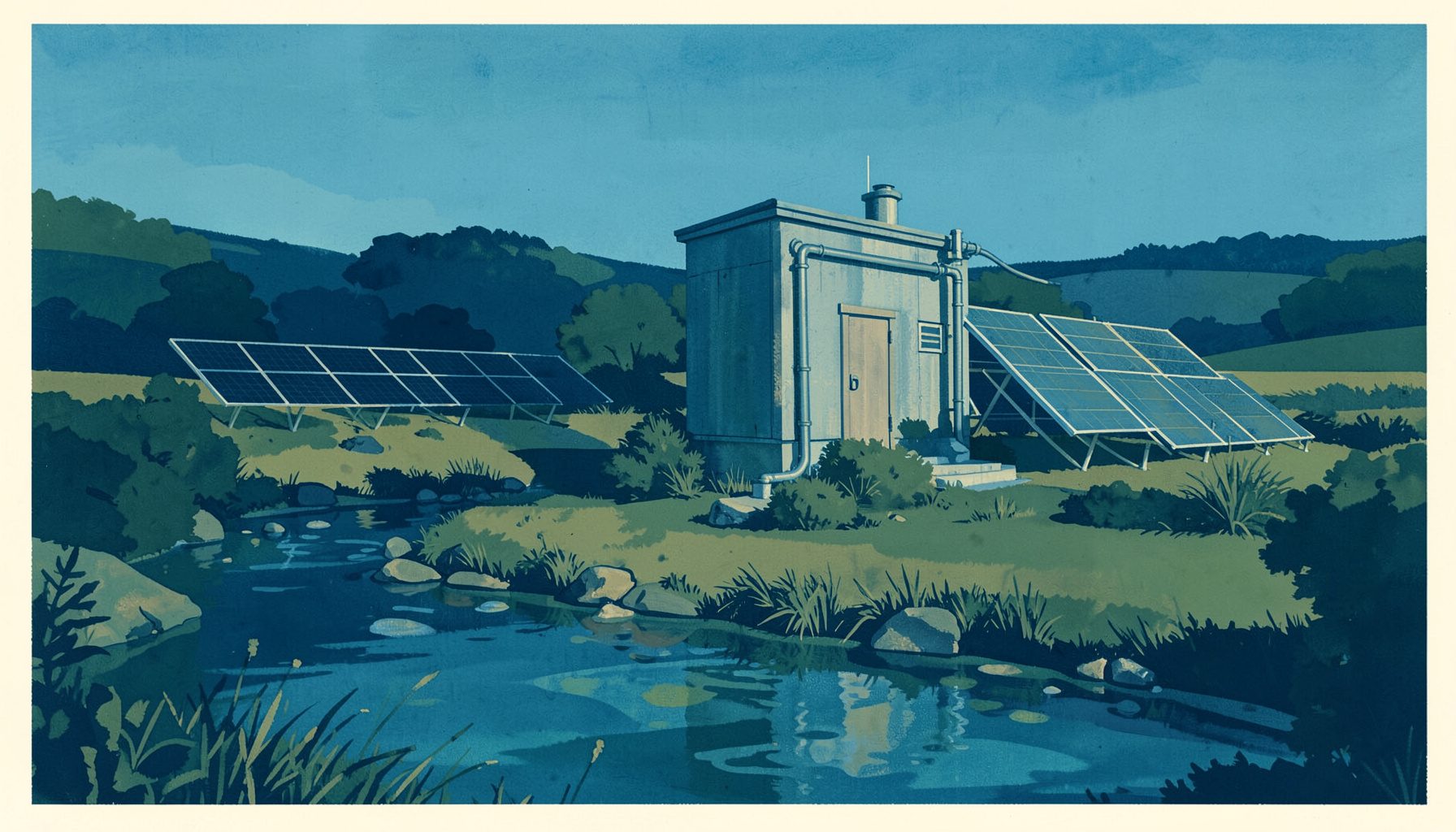
Selecting the right technology
DWC identifies and selects appropriate technologies and processes tailored to each project's context. Every choice is guided by the principle of avoiding fossil fuels, ensuring that systems remain affordable to run and genuinely sustainable over the long term.
We evaluate local conditions, water quality requirements, and available renewable energy sources before recommending a solution. This pragmatic, site-specific approach avoids one-size-fits-all answers and keeps both capital and operational costs manageable.

Core technology areas
Our work spans the full water cycle, from supply to treatment and reuse, always with a focus on decentralised, renewable-integrated systems.
Our approach to technology selection is rooted in the conviction that sustainable water solutions must be context-driven rather than generic. We begin by thoroughly assessing local conditions, including water quality, available renewable energy sources, and the specific needs of the community or facility. Every recommendation is guided by a firm commitment to avoiding fossil fuel dependence, which keeps both capital and operational costs manageable over the long term. This site-specific evaluation ensures that the systems we propose are not only environmentally sound but also economically viable. By avoiding one-size-fits-all answers, we deliver solutions that are genuinely sustainable and tailored to the realities of each project, reducing running costs while maintaining high performance standards.
Decentralised water treatment forms a cornerstone of our technical philosophy. Rather than relying on large, centralised infrastructure that requires extensive piping and high energy input, we focus on modular, localised systems that can be powered by renewable energy sources. This approach reduces transmission losses, lowers construction costs, and allows communities to manage their own water resources more effectively. Decentralised solutions are particularly well-suited to rural or peri-urban areas where grid extension is impractical or prohibitively expensive. By integrating renewable energy technologies such as solar or biogas with compact treatment units, we create systems that are resilient, affordable, and capable of operating independently of fossil fuel supplies.
Ecological sanitation principles guide many of our projects, recognising that human waste can be treated as a resource rather than a liability. We implement systems that safely recycle nutrients and water, closing the loop between sanitation and agriculture. This integrated approach reduces pollution of natural water bodies, conserves freshwater resources, and produces valuable by-products such as fertiliser or biogas. Our technical teams assess local cultural practices, regulatory frameworks, and environmental conditions to design sanitation solutions that are both hygienic and socially acceptable. By combining ecological sanitation with decentralised treatment technologies, we help communities achieve multiple benefits: improved public health, enhanced food security, and reduced environmental impact, all while avoiding energy-intensive conventional treatment methods.
Capacity building and ongoing support are essential to the long-term success of any water or sanitation project. We provide comprehensive training for local operators and maintenance teams, ensuring that systems continue to function effectively long after installation. This includes hands-on instruction in routine operations, troubleshooting, and basic repairs, as well as deeper technical education for more complex processes. Our approach recognises that the best technology will fail without skilled personnel to manage it. We also offer ongoing monitoring services and remote technical assistance to address challenges as they arise. By investing in local expertise and fostering a culture of continuous learning, we help communities maintain ownership of their water infrastructure and sustain its benefits for years to come.

Water Supply
Decentralised extraction, treatment, and distribution systems powered by solar, wind, or hybrid renewable sources.

Wastewater Treatment
Low-energy biological and ecological treatment processes designed for small to medium-scale applications.

Renewable Integration
Coupling water infrastructure with photovoltaic, wind, or biogas energy to eliminate reliance on fossil fuels.

Installation & Setup
Complete system installation, commissioning, and on-site integration into existing infrastructure.
Why fossil-fuel-free matters
Conventional water systems often depend on diesel generators or grid electricity from fossil sources. By selecting technologies that run on locally available renewable energy, DWC helps communities cut running costs and secure long-term operational independence.
This philosophy underpins every technology recommendation we make — from pump selection to treatment process design — and is central to achieving truly sustainable water management.

Discuss a technology solution
Contact Oliver Kopsch to explore appropriate technologies for your water supply or wastewater treatment project.
Get in touch